
A utility can have a sound safety procedure and still struggle to apply it consistently. The difficulty often appears where the written plan meets a changing worksite: a different crew, an unexpected energized asset or a repair that becomes more complicated than the original assignment. The practical challenge is to recognize that change and confirm the necessary controls before work continues.
For safety leaders, this raises a question that a completed form may not answer. Did the crew discuss the actual hazards, understand their responsibilities and verify the precautions required for this job?
The consequences of missed controls
BLS estimated 6,040 nonfatal injury and illness cases involving days away, restricted duties or job transfer among electrical power-line installers and repairers in private industry across 2023–2024. The median combined duration of those effects was 35 days. [1] These cases cover many causes, but they show how much working capacity can be lost when field safety breaks down.
A specific investigation illustrates the stakes of preparation. In March 2026, OSHA reported that a pole-replacement incident had killed one lineworker and hospitalized two others. The agency cited failures involving approach distances, a designated observer and briefing precautions, and proposed $49,650 in penalties. The employer, Primoris T&D, contested the citations. [2] The proposed fine captures only one potential cost; treatment, interrupted work and the impact on families extend beyond it.
Why a signed form can miss the problem
A procedure describes an intended sequence. A briefing must establish how that sequence applies to the site and who will carry out each critical action. For covered utility work, OSHA requires discussion of hazards, procedures, special precautions, energy controls and PPE, with additional briefings after significant safety-related changes. [3]
In Incident Prevention, Matt Edmonds and Pam Tompkins explain that writing an item on a briefing form does not establish that it happened. [4] A single signature may leave uncertainty about individual participation or a later change. In practitioner commentary, Ken Lulow describes how production pressure, familiarity and crew expectations can normalize skipped steps. [5] A routine job can gradually become an excuse to omit a control.
What could make execution more consistent
The first improvements are organizational. Review procedures with the people who use them, make critical instructions easy to find and give crews enough time to discuss the job. Ask workers to explain the controls relevant to their own tasks. Define when to stop, rebrief or seek help, and make the responsible supervisor available to resolve uncertainty.
Digital checklists could reinforce that process by requiring an acknowledgement and supporting evidence at each step. An unresolved deviation could block work progression until corrected or an authorized manager or crew leader signs an allowable exception. Mandatory safety prerequisites remain conditions for work; an approval cannot waive them.
Facial recognition is one way to authenticate the individual making a sign-off. It should accompany a deliberate acknowledgement, an approved alternative when recognition fails and clear protection of biometric data. Authentication identifies the signer; discussion and evidence help establish whether the acknowledgement was meaningful.
Digitally signed records could link those acknowledgements to the procedure version and selected photos or short video clips. Supervisors could review a changed condition or use a field example in training. Test whether this improves briefing quality and correction of deviations, rather than judging success solely by the number of completed checklists.
A utility platform example
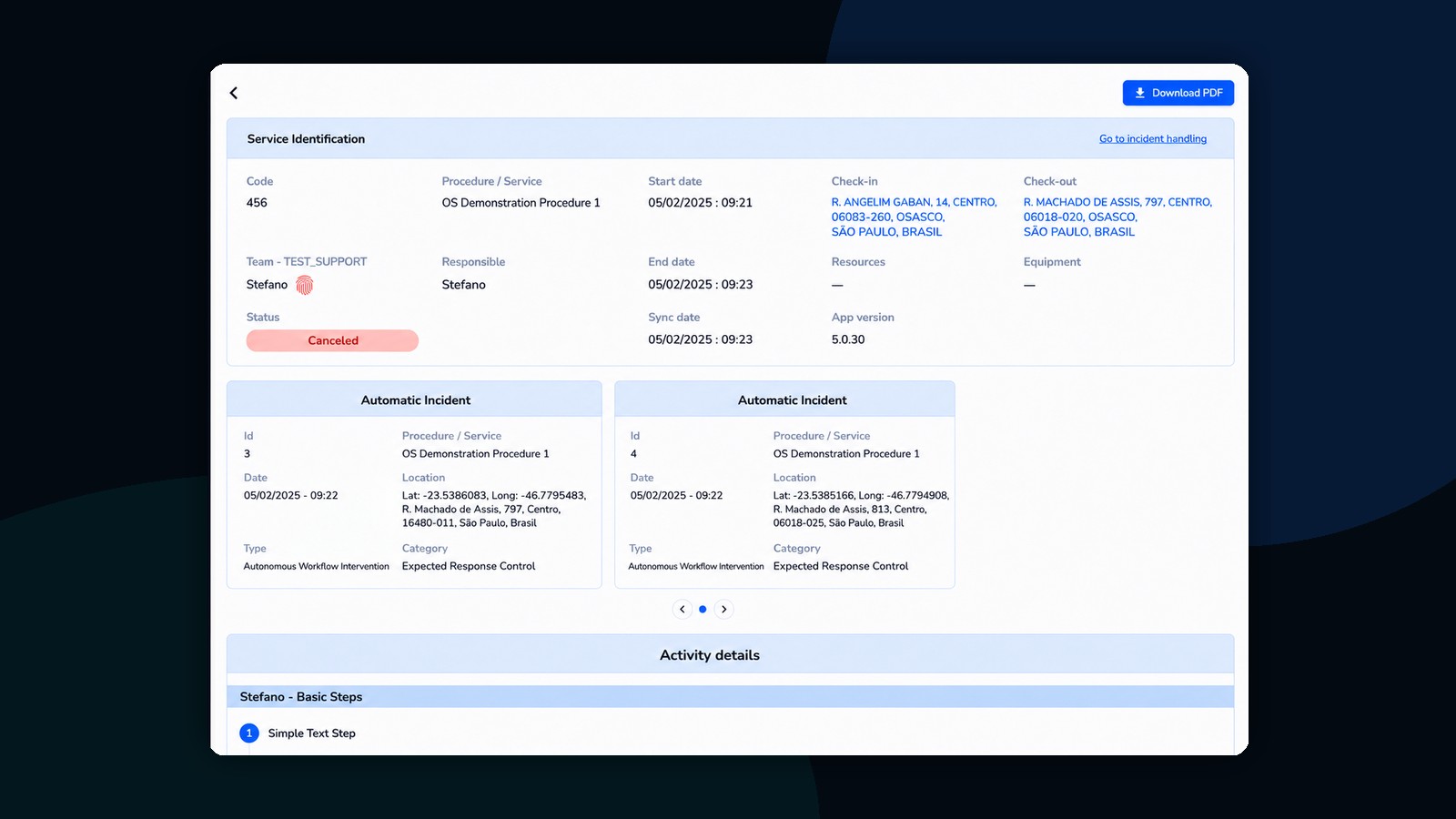
SalvaIQ applies this approach through its SWorker platform, combining digital procedures, biometric authentication and field evidence. Its checklist can require step acknowledgements and pause progression for correction or authorized review. [6] The relevant question for a utility is whether these capabilities strengthen its existing briefing and supervision practices, using field observations and the quality of resolved exceptions to assess the result.
Sources
- BLS. SOII Table R66. Private industry, 2023–2024; occupation 49-9051, DART cases.
- OSHA. Primoris T and D investigation. March 13, 2026; proposed penalties and contested citations.
- OSHA. 29 CFR 1910.269 paragraph c.
- Edmonds and Tompkins. Why are Job Briefings and Risk Assessments Important. Incident Prevention, February 2021.
- Ken Lulow. The Real Cost of Cutting Corners Part 1. Line Worker Solutions, April 3, 2025; practitioner commentary.
- SalvaIQ. Main Presentation v02 and supplied feature descriptions. August 2026 presentation and project brief.