
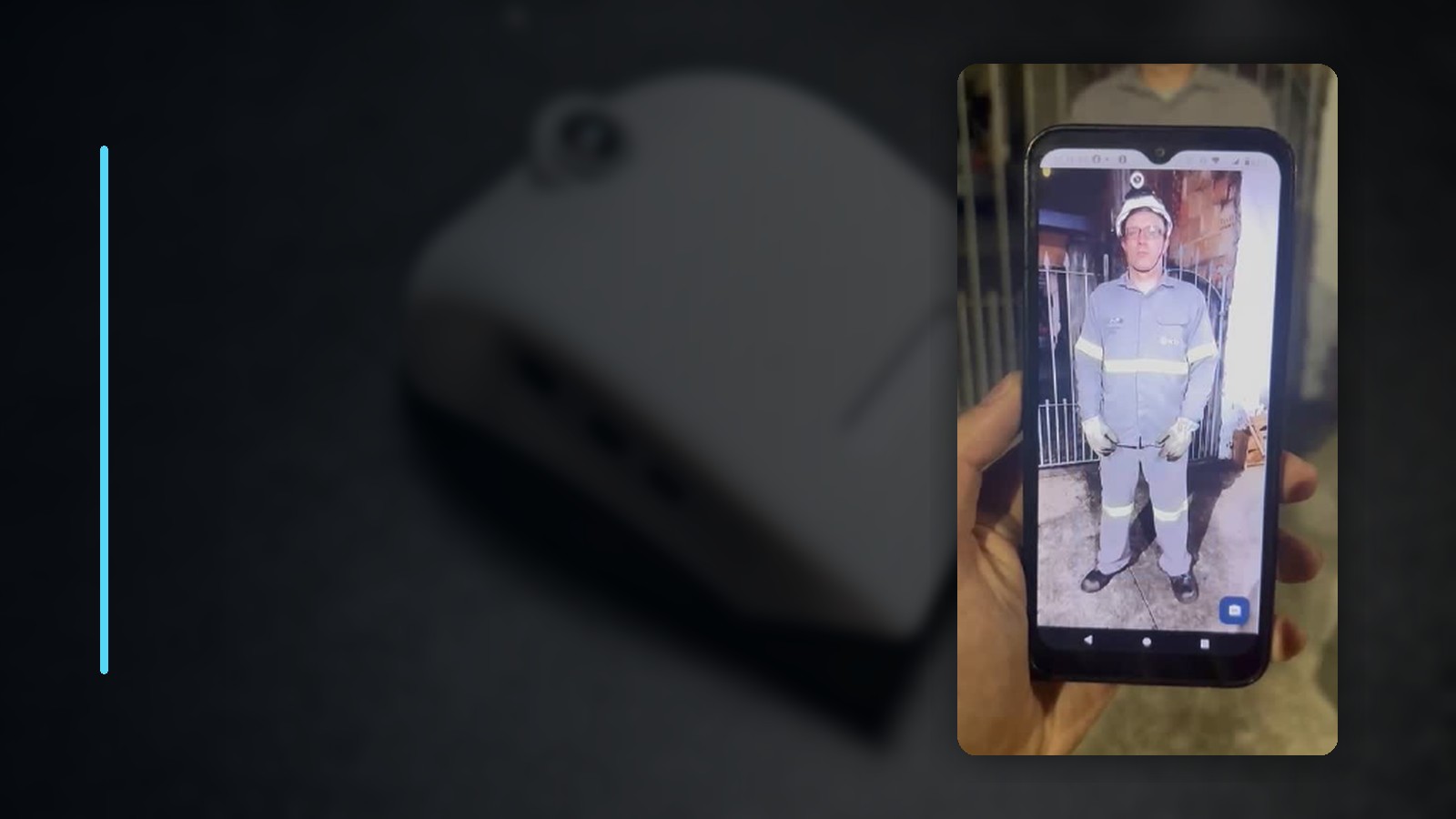
Personal protective equipment can be available on a truck and listed on a briefing form while protection at the worksite remains uncertain. The Lineman may have the wrong equipment for the task, wear it incorrectly or use an item whose inspection or test status is no longer acceptable. Supervisors responsible for dispersed crews cannot observe every preparation step.
Closing that gap requires a way to confirm both the equipment selected and its use at the point of exposure. It also requires understanding what a visual check can establish.
The injury exposure and its costs
BLS estimated 1,310 nonfatal contact-incident cases affecting normal work among electrical power-line installers and repairers in private industry across 2023–2024. These included 450 cases involving workers struck by propelled, falling, collapsing or suspended objects or materials. [1] The figures describe injury mechanisms; they do not establish that missing PPE caused the injuries.
The financial consequences can be substantial. National workers’ compensation data reported by the National Safety Council put the average lost-time claim caused by burns at $64,973 for accidents in 2022–2023. [2] That is a multi-industry insurance benchmark, rather than a lineworker-specific total employer cost. Disrupted work and replacement staffing can add further expense.
Equipment condition also matters. Following a fatal electrocution, OSHA’s December 2024 investigation of Dexter Fortson Associates identified expired electrical protective equipment alongside briefing, training and de-energization failures. The agency proposed $84,789 in penalties. [3] A check that merely confirms an item is present would leave important parts of that problem unresolved.
Presence is only part of protection
PPE has to match the hazard and fit the person using it. NIOSH describes how poor fit can reduce protection, create additional hazards or discourage use. [4] A helmet or pair of gloves appearing in a photograph therefore does not settle every question about protection.
Insulating glove test dates, arc ratings and damage hidden from the camera require separate verification. Equipment may also be removed or changed after a briefing. The practical challenge is to check the right things at useful points during the job, without making the check itself distracting or difficult.
What could improve verification
Start with suitable equipment, accessible replacements and training on selection, fit and condition. Practitioner guidance emphasizes explaining the hazard behind each safety step, so workers understand its purpose. [5] Crew members can check one another before exposure, while supervisors investigate repeated problems. Worker feedback may reveal a supply or comfort issue that another reminder would not solve.
A further option is image processing through the camera in a mobile device. At a safe checkpoint, it could compare visible PPE with the task requirements and prompt a retake or correction when an item appears missing or improperly worn. Linking the result to a checklist could pause progression until the issue is resolved or an allowable exception is reviewed.
Local processing could keep the visual check available without cellular coverage. Evidence could be retained for later synchronization, while remote manager alerts would require a communications link. An authenticated sign-off, image and correction history would give reviewers more context than a checkbox alone.
Such a system needs field validation. Test different lighting and viewing angles, including examples where required PPE is absent. Measure missed detections and false alerts, and retain a manual review path. Selected photos or short videos could support coaching, with clear access and retention rules. Improvement should be demonstrated through better preparation and resolved omissions.
A utility platform example
SalvaIQ combines mobile camera checks with digital procedures and authenticated acknowledgements. Its mobile PPE image processing runs inside the device, allowing local analysis without internet connectivity. [6] Linking images and deviations to the job creates evidence for supervisory review and training. A utility should assess that workflow alongside its equipment inspections and crew checks, particularly where coverage and direct supervision are limited.
Sources
- BLS. SOII Table R12. Private industry, 2023–2024; occupation 49-9051, DART cases.
- National Safety Council. Workers Compensation Costs. NCCI accident years 2022–2023; cause of injury.
- OSHA. Dexter Fortson investigation. December 26, 2024; proposed penalties.
- NIOSH. Personal Protective Equipment Fit in the Construction Sector. March 2023.
- Line Worker Solutions. Why Safety Training Often Fails Without the Knowledge of Why. June 23, 2026; practitioner commentary.
- SalvaIQ. Main Presentation v02 and supplied feature descriptions. August 2026 presentation and project brief.