
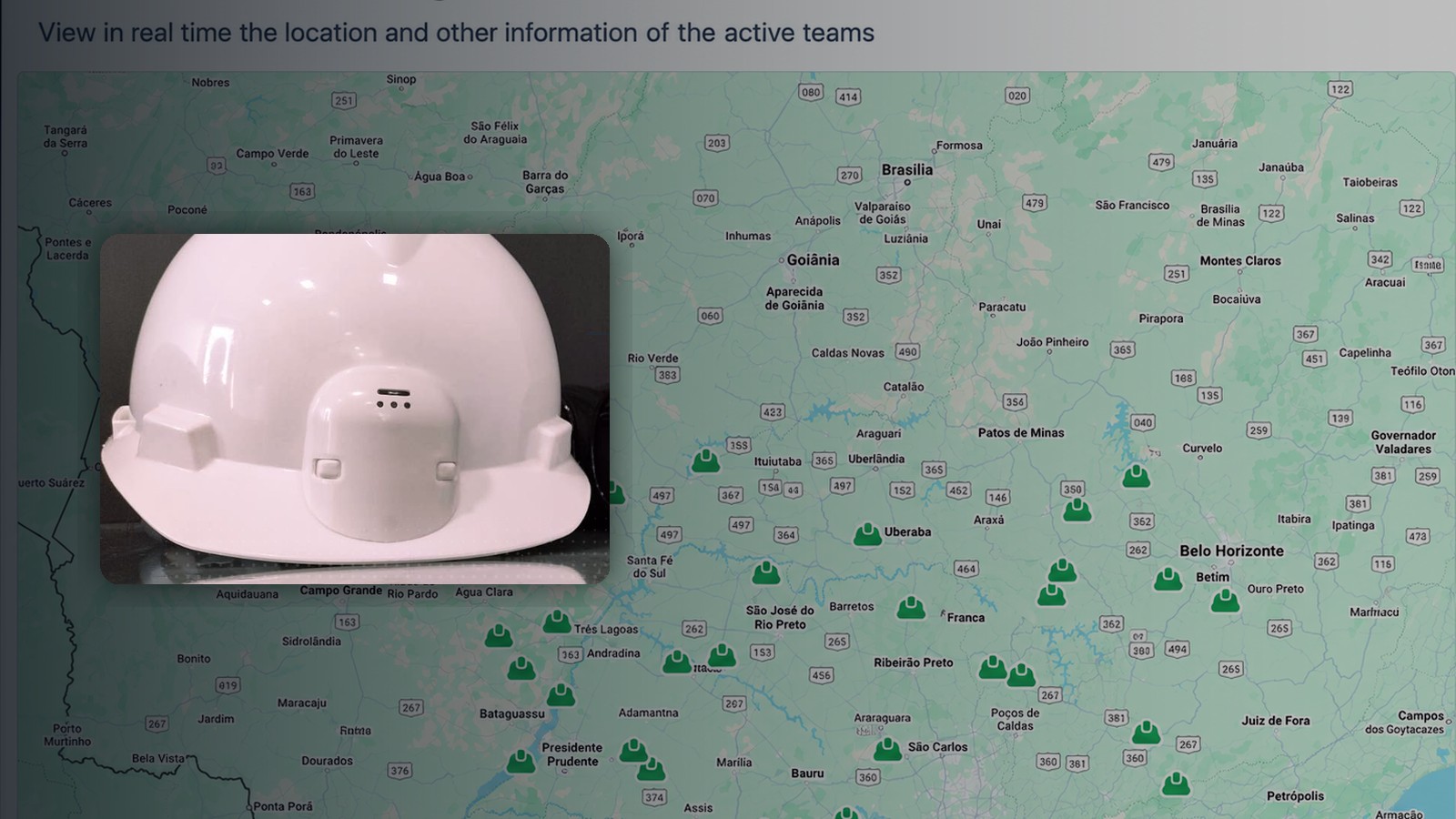
A lineworker can lose the ability to call for help at the moment assistance becomes most urgent. Electrical contact or a fall may leave someone incapacitated, while a supervisor knows only that the assignment is still underway. At a remote site, discovering the event and locating the lineworker become additional parts of the emergency.
Prevention and response need separate attention. Avoiding exposure depends on electrical controls and safe work practices. Getting help depends on recognizing the event, communicating it and carrying out a rescue plan.
The scale and severity of the hazards
BLS recorded 21 fatal work injuries among electrical power-line installers and repairers in 2024. The fatality rate was 13.8 per 100,000 full-time equivalent workers, compared with 3.3 for workers overall. [1] [2] These are occupation-wide figures, covering crew work as well as individual assignments; they do not measure rescue delays.
Falls also produce significant nonfatal harm. Across 2023–2024, BLS estimated 600 falls to a lower level affecting normal work among private-industry electrical power-line installers and repairers. [3] National workers’ compensation data put the average lost-time claim caused by a fall or slip at $54,499 for accidents in 2022–2023. [4] That benchmark spans industries and excludes a utility’s full operational impact.
The numbers establish the severity of the hazards. They also make a response process that depends entirely on an injured worker using a phone worth examining. A scheduled check-in can help identify missing contact, but leaves an interval in which an event may go unnoticed.
Where awareness and response can fail
An expected de-energized condition still requires verification. Appearance, prior work or a switching assumption cannot establish that a line is safe. OSHA specifies the applicable clearance, voltage-testing and grounding controls. It also requires at least two employees for specified hazardous electrical work, subject to defined exceptions. [5] Monitoring technology does not change those requirements.
For tasks permitted to be performed alone, the communication problem is particularly direct. Who notices an accident if the lineworker cannot respond? Does dispatch have a usable location and someone assigned to escalate an unanswered alert? Utility Partners of America emphasizes site-specific emergency planning and a clear response chain. [6] Those arrangements must be established before the job.
What could add protection and shorten detection delays
Begin with verified electrical controls, appropriate staffing and a practiced rescue plan. Practitioner guidance on human performance also urges examining fatigue, workload and communication around an incident, beyond identifying a missed step. [7] Confirm site access, available communications and how assistance will be requested, including when the worker’s phone is unavailable.
A wearable electric-field sensor could provide an additional local warning that prompts the lineworker to stop and reassess. It is supplemental awareness, rather than a voltage test or evidence that a particular conductor is safe. Fall detection could initiate a message when a lineworker cannot make the call manually.
Bluetooth can carry a helmet-mounted sensor event to a nearby mobile device. Reaching a supervisor or dispatch requires a separate connection, such as cellular service or an integrated radio or satellite gateway. An alert should include lineworker identity, job information and a location with its timestamp, followed by acknowledgement and escalation.
Retaining the event with the active checklist could show a warning, the lineworker’s acknowledgement and subsequent decisions. This may help review whether a step was bypassed, but interpretation requires the surrounding evidence. Test batteries, reconnection, false alarms and message delivery, and conduct response drills. The useful measures include detection time and the time until someone takes responsibility for the alert.
A utility platform example
SalvaIQ’s SEField connects electric-field and fall-related sensing to its SWorker mobile workflow through Bluetooth, with audible and visual electrical warnings. [8] A configured dispatch integration can extend that event into an emergency notification, subject to communications availability. Linking sensor records to procedure acknowledgements and field media gives a utility one way to evaluate both the immediate response and the decisions that preceded it.
Sources
- BLS. Fatal work injuries in selected occupations 2024.
- BLS. CFOI 2024 news release. February 19, 2026; overall fatality rate.
- BLS. SOII Table R12. Private industry, 2023–2024; occupation 49-9051, DART cases.
- National Safety Council. Workers Compensation Costs. NCCI accident years 2022–2023; cause of injury.
- OSHA. 29 CFR 1910.269(l)(2), (m) and (n).
- Utility Partners of America. A Field Level Perspective on Lineman Safety.
- Line Worker Solutions. The Human Performance Approach to Safety. July 2, 2026; practitioner commentary, not incident-count evidence.
- SalvaIQ. Main Presentation v02 and supplied feature descriptions. August 2026 presentation and project brief.